
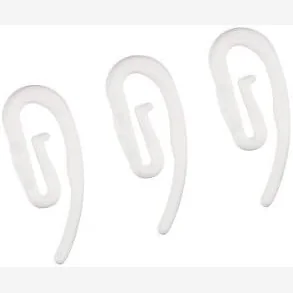
Swish Superluxe / Duo / Supreme Gliders (50)
Bulk roller gliders to refresh worn runners without replacing an otherwise sound track.
Check priceKeep an older Swish curtain track running like new. Genuine spares still available for tracks fitted decades ago.
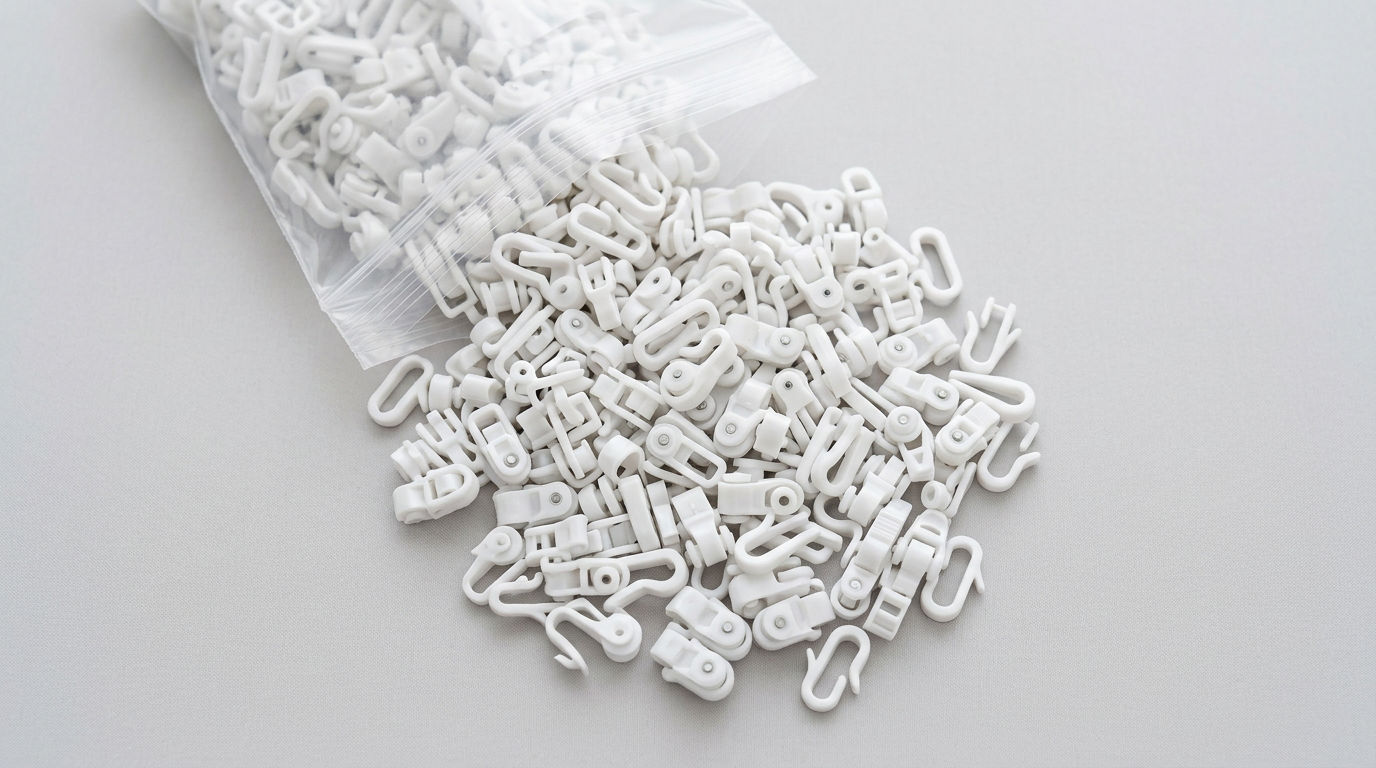
Replacement runners, brackets and short kits when an older track owes you nothing.
Bulk roller gliders to refresh worn runners without replacing an otherwise sound track.
Check price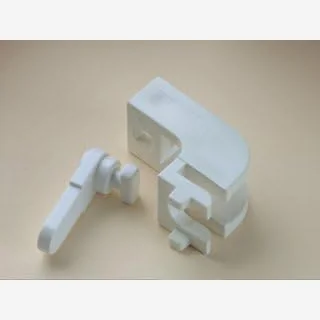
Replacement snap-on brackets after decorating or when you lengthen a legacy run.
Check price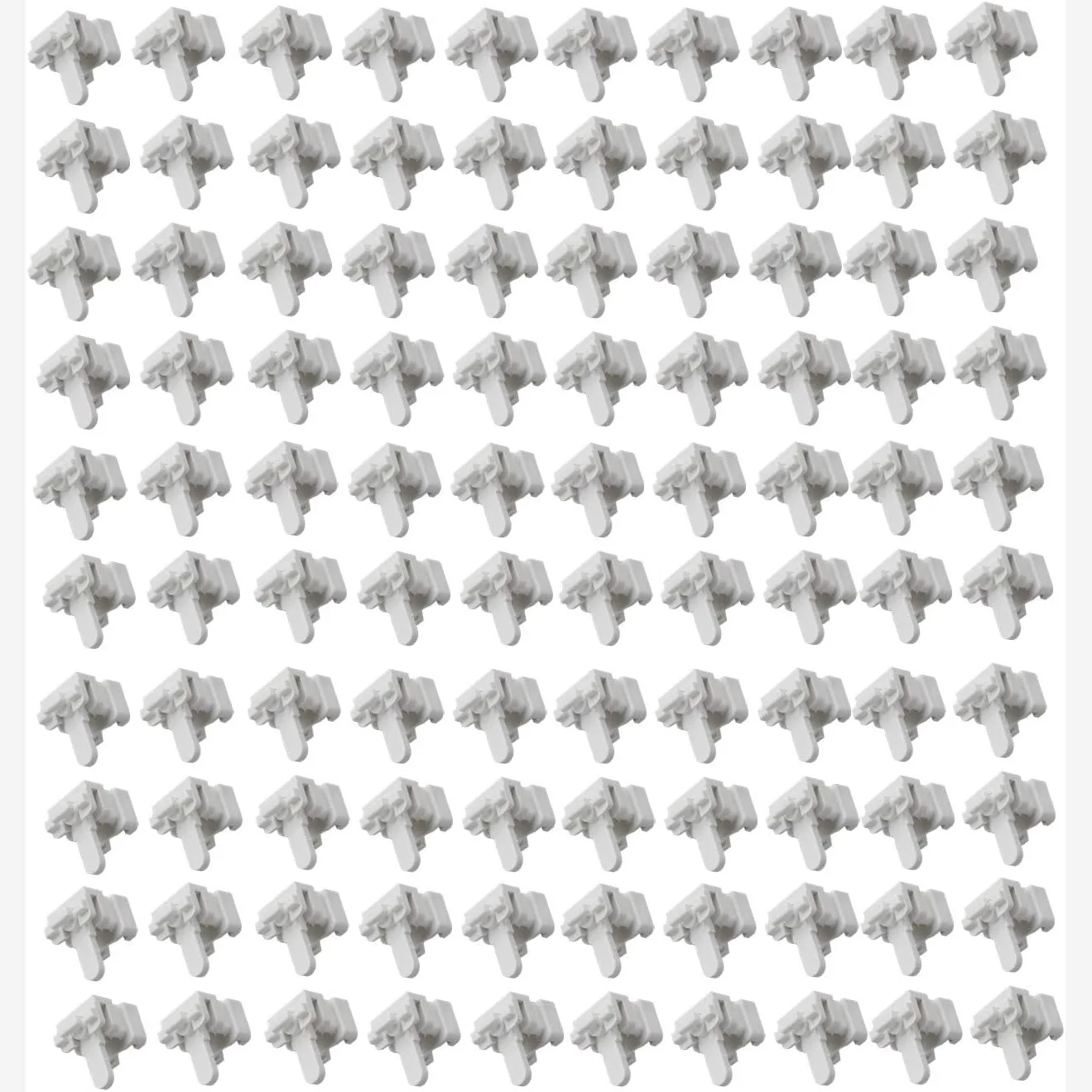
Large contractor pack when several rooms need fresh brackets in one delivery.
Check price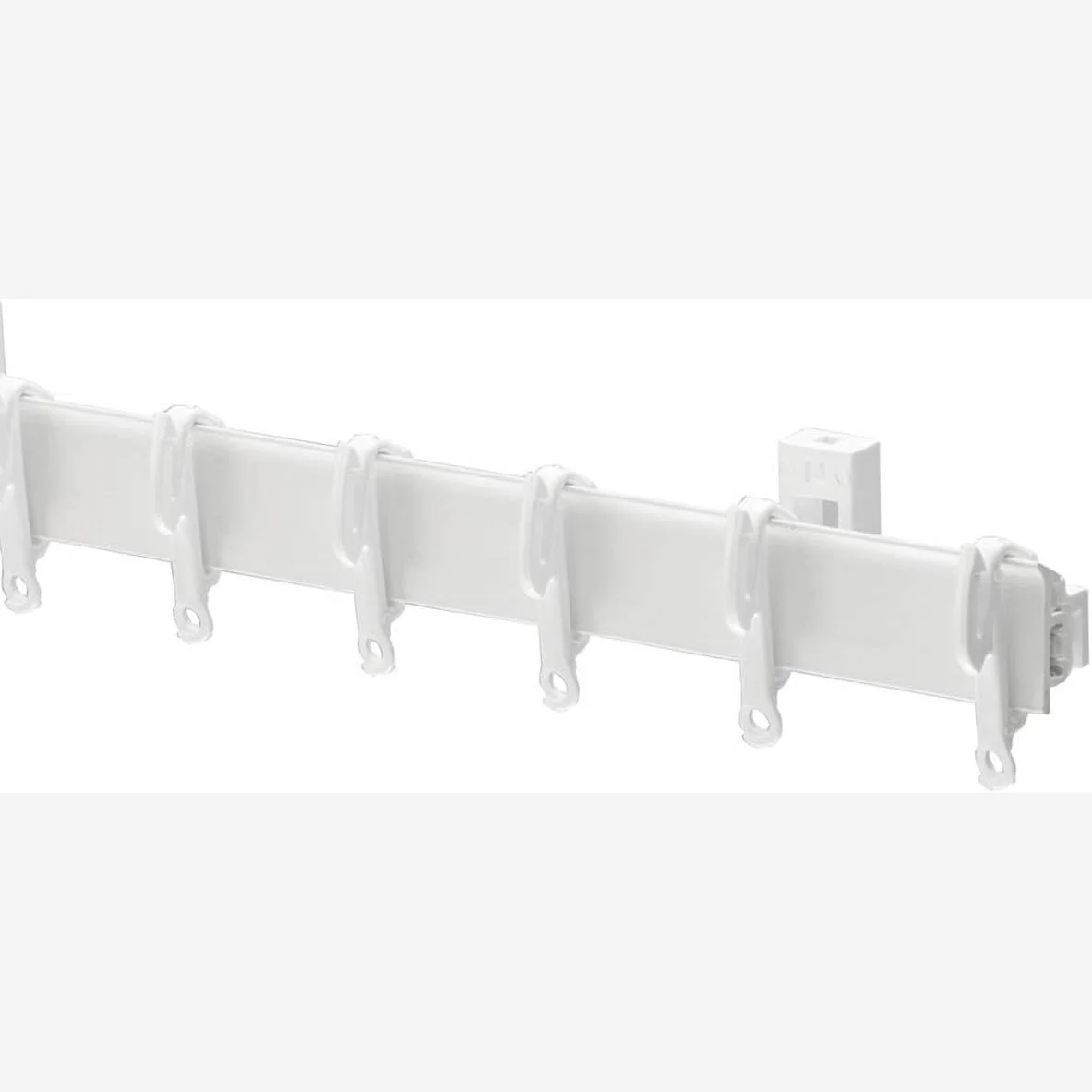
Fresh Sologlyde coil when an older PVC channel is cracked beyond economical repair.
Check priceMost Swish curtain tracks spend decades above a window doing exactly what they are supposed to do. Occasionally, though, a small component wears, snaps or goes missing down the back of the sofa, and the whole track stops behaving. The good news is that Swish spares remain widely available, and replacing the affected part is almost always quicker and cheaper than fitting a new track.
Swish curtain-track spares include:
Gliders take the most wear of any component on a curtain track. Dust enters the channel, works its way onto the glider’s contact surface and acts like very fine sandpaper. Over a decade or two of daily use, the glider develops flat spots, starts to rattle and eventually cracks. The symptoms are easy to spot: the curtain draws unevenly, you hear a slight grating, or the glider snaps cleanly in two.
The right time to replace gliders is when one fails and two more feel loose. Changing the whole set at once costs little and saves you fitting a new glider every few weeks as the older ones give up. When buying, match the glider shape to the track profile; modern Swish gliders are designed to be backwards compatible with most older Swish PVC and aluminium tracks.
An end stop is a small plug that sits at the very end of the track. It has two roles: it prevents gliders escaping and, on a corded track, it helps the cord change direction cleanly. When an end stop is missing, the nearest few gliders slide out of the track every time the curtains are fully drawn, which is both annoying and damaging to the heading tape.
Replacements are inexpensive. To fit, remove the worn stop (sometimes it will simply fall out), slide in the correct number of new gliders and press the fresh end stop home.
Corded tracks have a few additional parts that can wear. The cord itself will eventually fray and needs replacing; the cord-end housing contains the pulley that turns the cord around, and the cord tidy or tensioner at the bottom keeps the cord away from small children and pets. All three are available as Swish spares, usually in identical patterns to those fitted twenty or thirty years ago.
Re-threading a curtain-track cord is one of those small household tasks that looks daunting but is really very simple once you have seen it done. Remove the old cord, follow the routing diagram on the packaging of the new one, and tie the end with the knot shown. A clothes peg holds the cord in place while you feed it through.
Curtain hooks sit between the curtain heading tape and the glider. The most common type with Swish tracks is the plastic pin hook, which has a small pin that slots into the pocket of a pleat and a curved top that hooks into the glider’s eye. When you take a pair of curtains down to wash them, it is easy to mislay a few hooks, so spare hooks are always worth keeping in a drawer.
Brackets are the least-likely parts to wear out, but they do occasionally get lost after the original fitting kit is thrown away. The Swish Leverlock bracket remains in production and continues to fit most tracks from the 1970s onwards. Replacement brackets are sold individually and in pairs, so you can simply add one or two to an existing track where the curtains have become heavier.
Before buying, check your existing track:
Make notes and, if you can, take a single glider or bracket with you to compare to the product listing. Most failures are quickly solved with the correct genuine spare.
Tracks for Heavy Curtains
Aluminium systems for interlined drapes.
Tracks for Bay Windows
Flexible and corner-joint solutions.
How to Fit a Swish Track
Step-by-step DIY installation guide.
Leverlock Brackets
The wall and ceiling fixing that defined Swish.
Gliders
Replace worn runners for smooth draw.
Curtain Hooks
Plastic pin hooks for every heading style.