
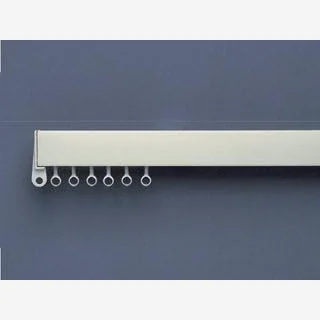
Swish Deluxe Curtain Track Set (250 cm)
Deluxe kit sized for standard pencil-pleat tapes and everyday metal pin hooks.
Check pricePlastic pin hooks, metal pin hooks and pinch-pleat combination hooks to match every curtain heading style used in UK homes.
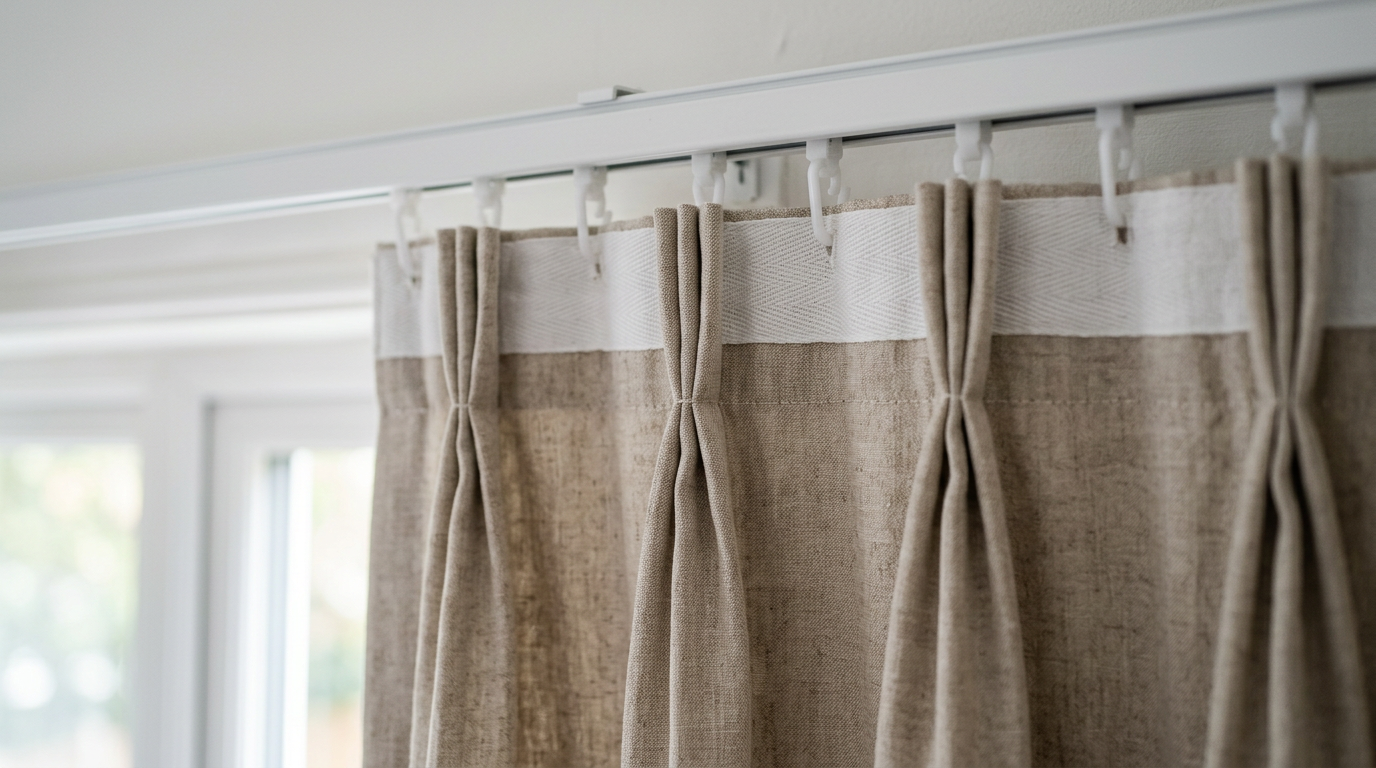
Complete kits sized for pencil pleat, taped and pin-on headings used with pin hooks.
Deluxe kit sized for standard pencil-pleat tapes and everyday metal pin hooks.
Check price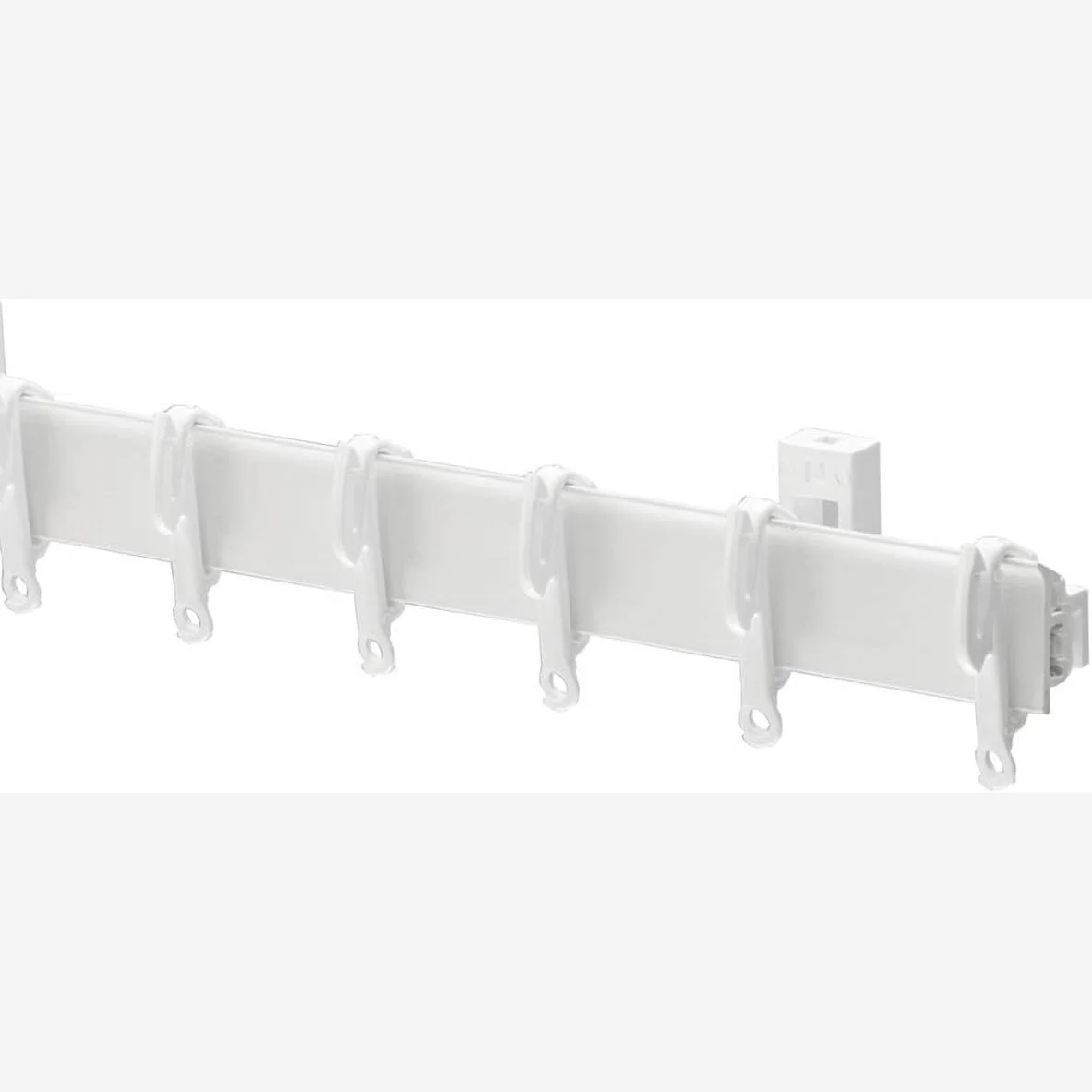
Flexible Sologlyde run compatible with taped headings after you clip hooks into the gliders.
Check price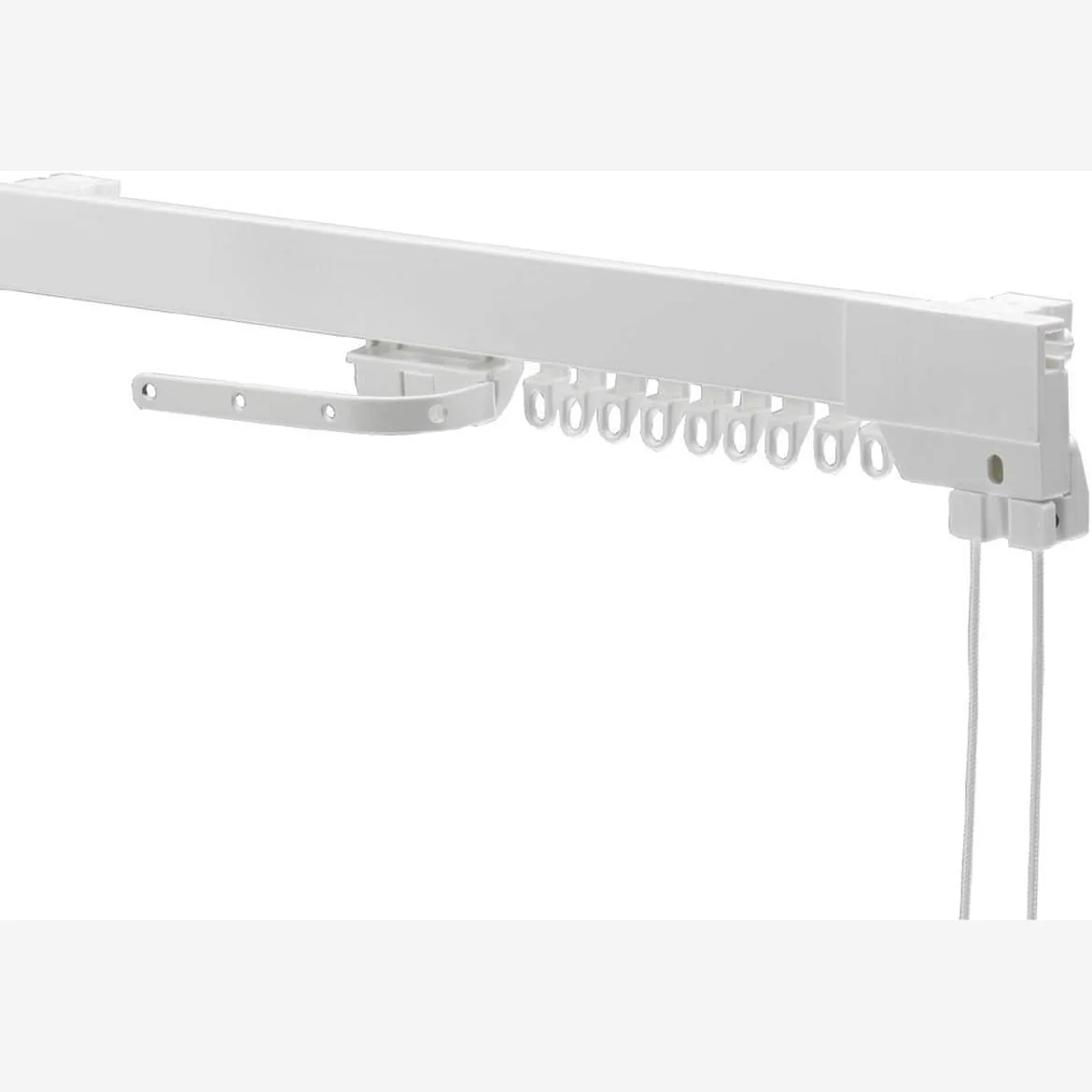
Corded aluminium span for thick interlined headings that need sturdy hook engagement.
Check price
Extra brackets when you strip curtains off hooks for cleaning then refix the track.
Check priceCurtain hooks are the quiet bridge between your curtains and their track. They are small, inexpensive and usually invisible behind the heading — and yet the wrong hook makes a pair of curtains sit crookedly, pull unevenly or simply fall off the track. This page explains which Swish curtain hooks work with which curtains.
Every curtain hook has three parts:
A hook fits a tape vertically, hangs downwards in two directions, and takes the whole weight of that portion of the curtain.
By far the most common pairing with a Swish track. A short pin slots up into one of the little pockets in the heading tape, a curved plastic body takes the turn, and the top hooks cleanly onto the glider’s eye. Pin hooks are light, quiet and cost next to nothing to replace.
Choose pin hooks for pencil-pleat, pinch-pleat and goblet-pleat headings. The pin makes them very tolerant of tape-tension errors: if the pleats are not perfectly even, you can push a hook a few millimetres to one side and the eye will still line up with the glider above.
Used with some specialist heading tapes and occasionally with older Swish tape. A flat back slides up behind the tape, and a curved top again attaches to the glider. Flat hooks work well where the tape has no pockets.
Identical in pattern to plastic pin hooks but made from formed metal. They carry more weight per hook and are the right choice for heavy velvet or interlined curtains. They are slightly more expensive but last almost indefinitely.
A four-pronged hook that grips three or four adjacent pockets in the tape and pulls them together to form a ready-made pinch pleat. Very satisfying when you get them spaced evenly. Combination hooks are used with loose-weave heading tapes that do not have pre-made pleats.
As a rule of thumb, one hook for every 8–10 cm of finished curtain width. Counting the pockets on the tape makes this easy: most pencil-pleat tapes have three rows of pockets, and you simply fill every other pocket in the row you want to use.
Measure the width of a single curtain after gathering and divide by 8. Multiply by two for a pair of curtains. This gives a sensible starting number; always buy a small surplus for future spares.
Most tapes have three rows of pockets at different heights. You use these to fine-tune the height of the curtain:
Decide which row to use before you begin hooking, and use the same row right across the curtain so the top line is perfectly flat.
Remove hooks before washing curtains. Hooks can snag on other garments in a washing machine, and they can clog a drain. Hang the washed curtain briefly to check the heading tape is clean before re-hooking.
Keep a small tin of spares. A pack of twenty hooks is inexpensive, stores in a drawer for years and will spare you a trip to the shop on the evening you put the winter curtains back up.
Tracks for Heavy Curtains
Aluminium systems for interlined drapes.
Tracks for Bay Windows
Flexible and corner-joint solutions.
How to Fit a Swish Track
Step-by-step DIY installation guide.
Leverlock Brackets
The wall and ceiling fixing that defined Swish.
Gliders
Replace worn runners for smooth draw.
Curtain Hooks
Plastic pin hooks for every heading style.