
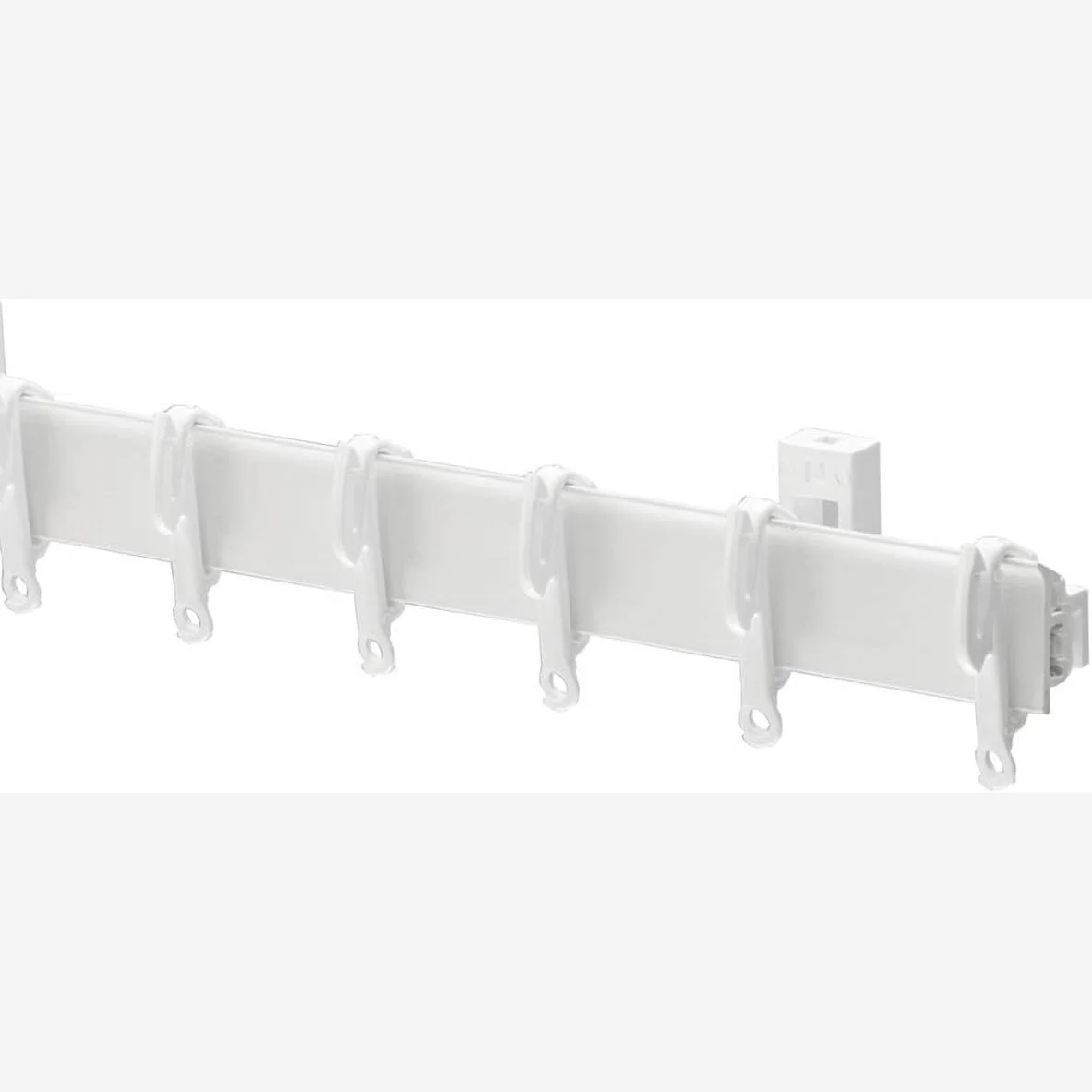
Swish Sologlyde Curtain Track Set (200 cm)
Flexible PVC length you can bend around shallow angled bays before locking off with brackets.
Check priceFlexible PVC tracks for gentle curves and aluminium with factory-formed corners for sharper bays, always using the same Leverlock bracket.

Flexible PVC and corded kits homeowners shape around angled and curved bays.
Flexible PVC length you can bend around shallow angled bays before locking off with brackets.
Check price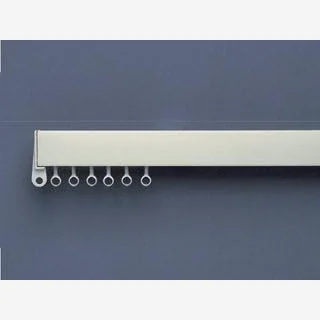
Straight Deluxe run often paired with extra brackets either side of each bay angle.
Check price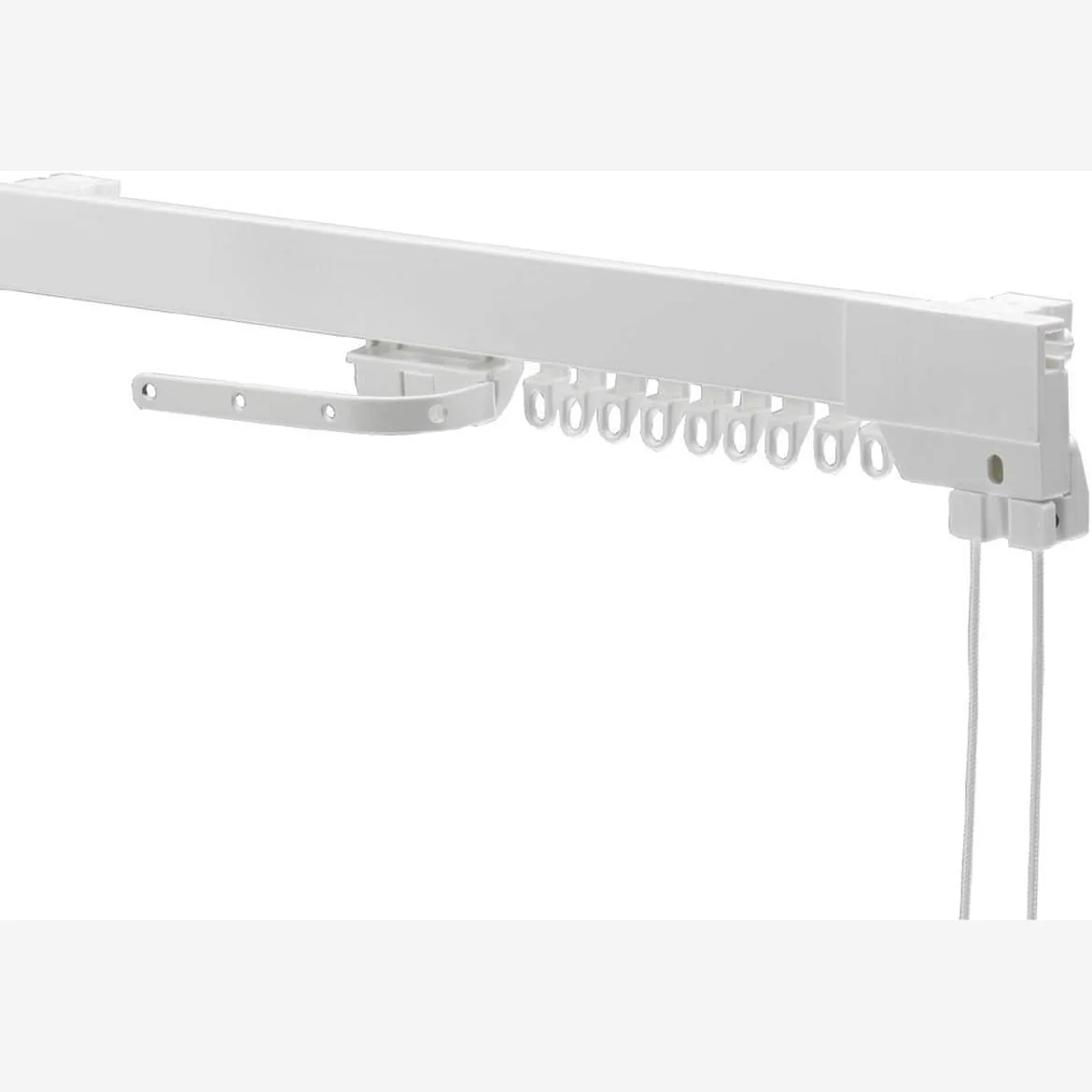
Corded aluminium for wide bays carrying lined curtains across several angles.
Check price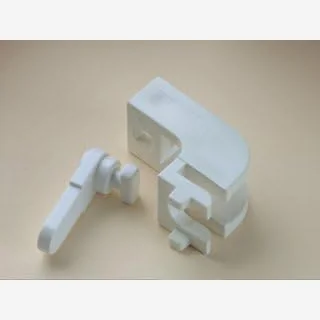
Five-pack of snap-on brackets to add fixing points tight against bay corners.
Check priceA well-dressed bay window is one of the most flattering features in a British home. The curve of the curtain, the softness of the fabric against the wooden frames, the way the evening light pools at the corners — it is all made possible by a curtain track that can follow the bay faithfully. Swish has offered bay-window systems for decades, and the modern range covers everything from gentle curves to sharp three-angle bays.
Before choosing a track, work out exactly what shape of bay you have. The two most common types in UK housing are:
A third type, the box bay, has square corners and runs at 90 degrees, and is handled just like an angled bay. If you have a deep oriel or a rare five-section bay, note the angles carefully as you will need to confirm that the chosen track can cope with them.
Flexible PVC bay tracks are the simplest solution for most angled and gently curved bays. The track can be bent by hand around the corners of the bay and is then held in place with extra Leverlock brackets either side of each bend. Because the curve is formed in the track itself, there are no joints for gliders to catch on, so curtains move smoothly around the full bay.
Flexible PVC works best for bays where the curtains are medium in weight. For larger bays, or where bays have sharp 90-degree corners, aluminium is usually a better fit.
Aluminium bay systems use straight lengths joined at each corner with a factory-formed angle connector. The finish is beautifully crisp, the profile is slimmer, and the track supports significantly heavier curtains. The trade-off is that gliders must pass cleanly across the joint, which means the angle connectors have to be aligned perfectly during fitting.
A corded bay track is a joy to use. Because the cord pulls the curtains smoothly from a single fixed point at one side of the bay, there is no need to reach into the bay to push the fabric along — which is particularly helpful if there is a sofa or a radiator directly beneath the window. On the other hand, a hand-drawn track is lower in cost and easier to repair, and many homeowners prefer the traditional look.
Measuring a bay accurately is the single most important step. Follow these directions:
Put these numbers on a simple sketch before you buy, and keep the sketch to hand during fitting.
Brackets need to do two jobs in a bay: support the weight of the curtain and hold the corners at the correct angle. As a general rule, fit a bracket within 10 cm either side of every bend, and then continue with the usual 40–60 cm spacing along the straight sections. On wider bays you may also benefit from a central bracket at the back of the front pane.
Work your way around the bay and mark each bracket position in pencil first. Only drill once you are happy that the whole track will sit level. A small spirit level, or even a long straight piece of timber, helps keep bracket heights consistent as you move around the corners.
Curtains for a bay are usually made as a single pair that runs the full width, meeting in the centre of the front pane. They should stack clear of the glass at each end so that the window is unobscured when the curtains are open. If the bay is very wide, a central overlap arm helps the leading edges cross without gaps and is essential if you want full blackout in a bedroom bay.
Stiff draw at the corner is almost always caused by one bracket that sits a few millimetres lower or higher than its neighbours. Loosen the screws, nudge the track back to level and retighten. If the problem persists, inspect the angle connectors for grit.
Curtains pulling away from the track at the corners usually indicate that the gliders are stretched across too steep a bend. The answer is often to add an extra glider or two near the corner, spreading the heading tape’s pull more evenly.
Tracks for Heavy Curtains
Aluminium systems for interlined drapes.
Tracks for Bay Windows
Flexible and corner-joint solutions.
How to Fit a Swish Track
Step-by-step DIY installation guide.
Leverlock Brackets
The wall and ceiling fixing that defined Swish.
Gliders
Replace worn runners for smooth draw.
Curtain Hooks
Plastic pin hooks for every heading style.